

Here is my ranking of every anime I’ve watched, from worst to best, excluding Pokémon—which I watched 27 years ago as a child—Dragon Ball, and an anime or two that I watched while distracted and therefore cannot judge fairly.
I watched each of these in Japanese with subtitles.
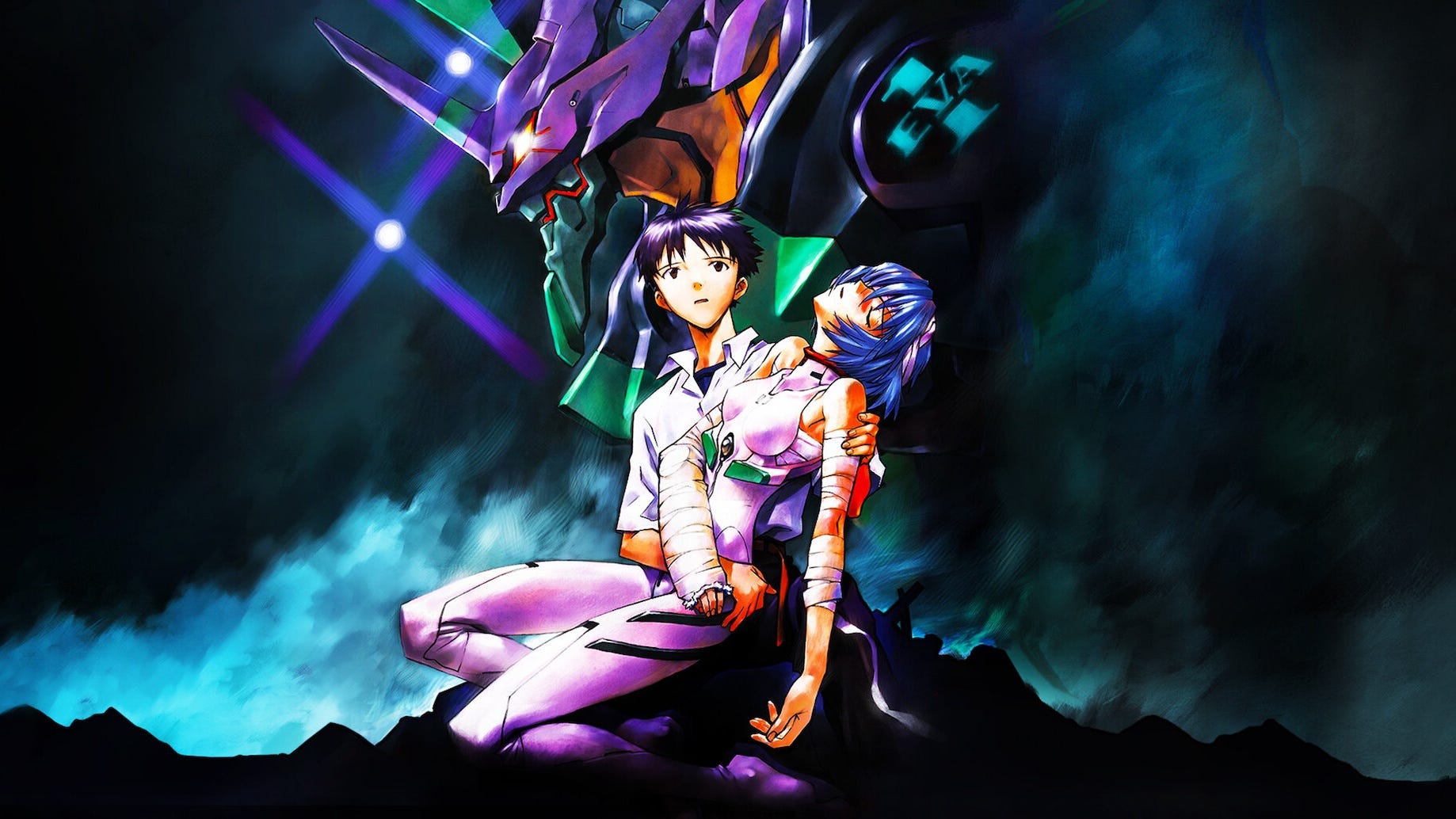
#4 — Neon Genesis Evangelion
Note: I watched the original series and the original movies.
Neon Genesis Evangelion is unintelligible Freudian garbage, valuable only as an object lesson on the idea of “getting it.”
All creation is caused. Therefore, there is always something to “get.” However, that a creator was motivated by an idea does not matter if it is not “gettable” from his creation.
The show’s only virtues are its ‘90s-anime style and its central twist, which upends a cliché in an interesting way but is wasted on this disgusting nonsense.
“Cliché” is the word to use, by the way. “Trope” is an anti-concept that implies that classifiability is invalidating, which is anti-identity, and therefore anti-existence, and therefore anti-you.
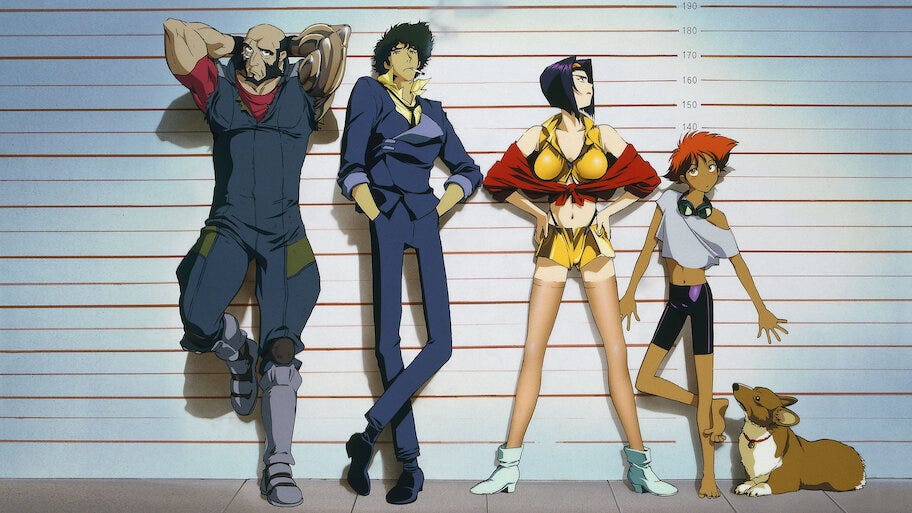
#3 — Cowboy Bebop
Alfred Hitchcock often said, “Some films are slices of life. Mine are slices of cake.”
Cowboy Bebop is certainly not cake. It’s a slice of life, even if the life in question is that of an interplanetary bounty hunter.
It took me a week to get through it, but it felt like it took months.
My experience with the show would have been even worse if I had not watched it immediately after Evangelion, compared to which boredom was a relief.
In a way, however, Bebop is worse than Evangelion.
Would you rather be stuck in traffic for hours without your phone, the radio, or company, or be in that same situation except that right outside your window is a massive wreck with blood and guts splattered everywhere?
The latter is at least more stimulating.
I liked one moment in Bebop, which was when Faye ate the last of the food and told the dog, “Those who don’t work, don’t eat. Go find your own food. Me? I’m okay. Women are grand by birth.”
Hot.
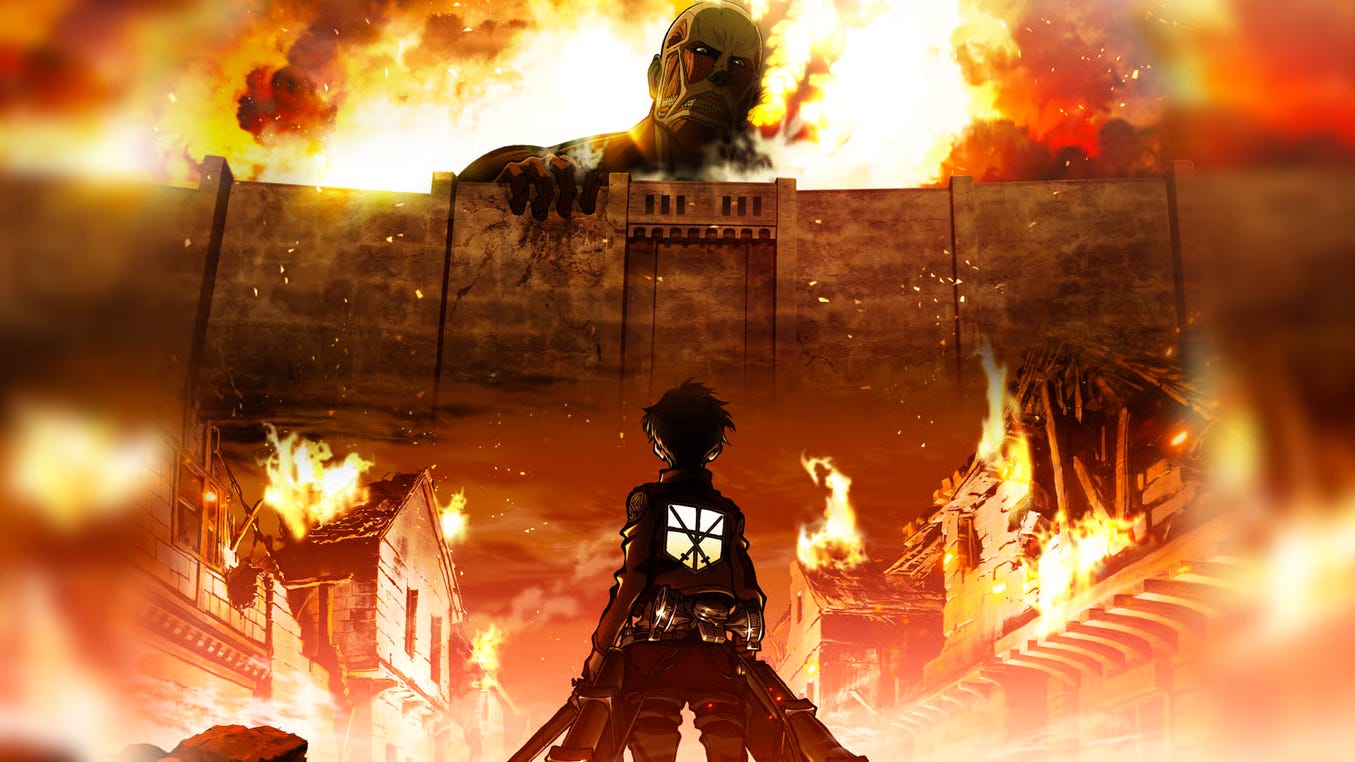
#2 — Attack on Titan
Attack on Titan is a late-medieval or early-modern version of Evangelion, in that both are about the last bastion of mankind holding out against giant, mysterious monsters.
One of the best things about the Japanese is their lack of respect for realism. Characters in Titan use hip-mounted grappling devices that allow them to swing around like Spider-Man while dual wielding swords. The show never makes a cowardly apology for this or for any of its other unrealistic inclusions.
It’s good, but its ending was obviously changed last-minute and retroactively ruins the rest of the show by contradicting every setup it was meant to pay off.
I can only speculate as to the reason, but this seems to have been done to appease those who wanted certain characters to end up together, or possibly to avoid controversy, given the subjects the show deals with (which I won’t go into because they constitute spoilers).
It’s often said that endings are the hardest part of a story to get right, but this is mistaken. Endings only appear to be the hardest part to get right because it is only at the end that a bad beginning or middle is revealed as such.
Attack on Titan is an unusual case where it is specifically the ending that is bad. The quality of the rest of the show is not an illusion. This was not a J.J. Abrams production. It could have ended well. It just didn’t.
Nonetheless, knowledge of the ending does render the rest of the show unwatchable. Since there are no discrete arcs, there are no rail cars to detach. It’s one big train, and it goes off a cliff.
Though I could never watch the show again given its catastrophic ending, I’ll keep coming back to its second opening (embedded below) until I die. It is at once grave and buoyant, as all the best art is.
If you’ve already decided that the disappointment is worth it, skip the video (since you’ll see it anyway) and go in as blind as possible. The mystery of the world is a big part of the show.
However, if you decide to watch the show because of the video, you’ll still be OK. The spoiler it contains is an early one.
Turn on subtitles unless you speak both Japanese and German.
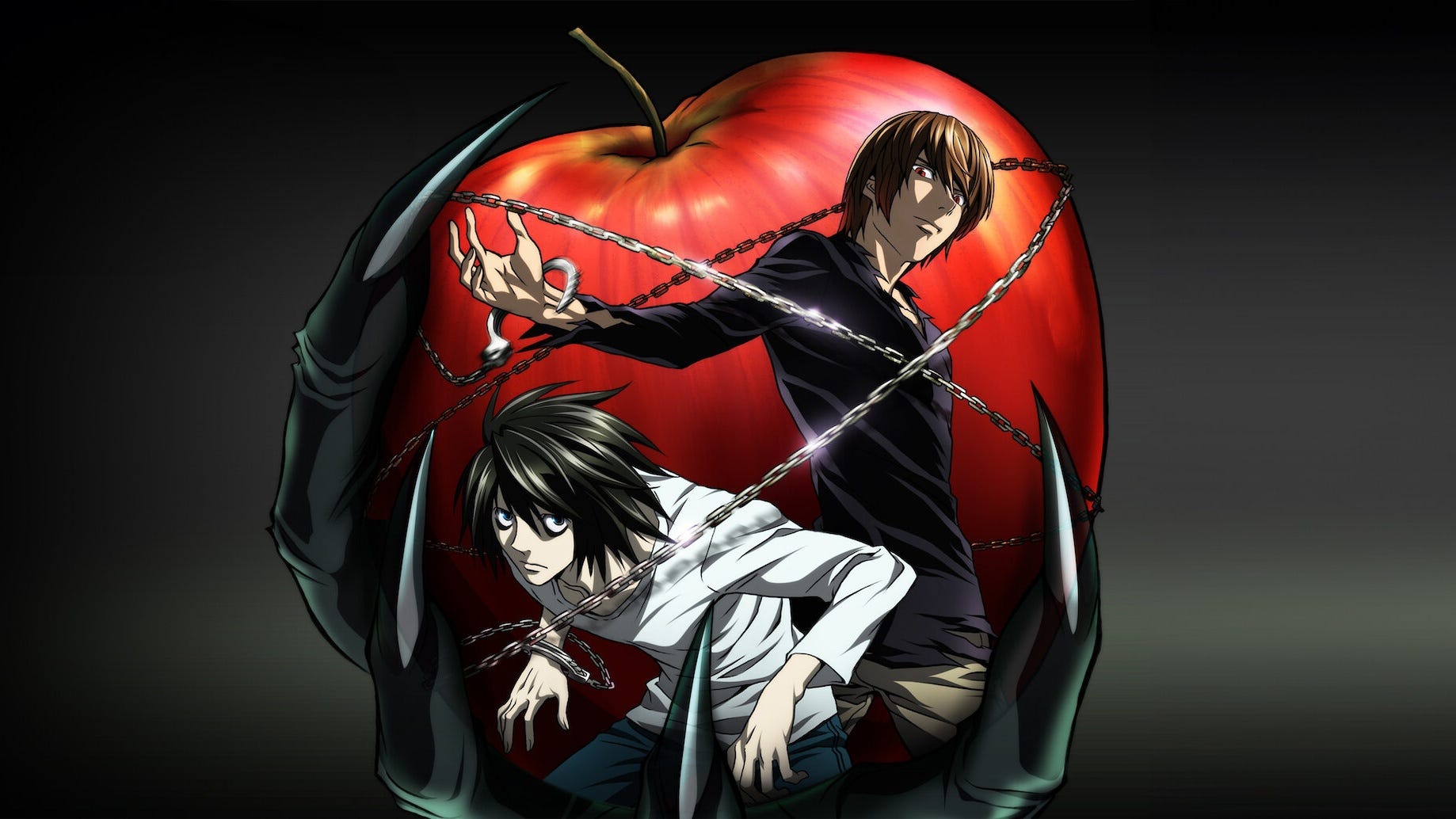
#1 — Death Note
Death Note is one of my favorite pieces of fiction. I recommend it to anyone, even before Dragon Ball.
This is not because I like it more than Dragon Ball, but because it is both shorter—being 37 episodes as opposed to hundreds—and more widely appealing—being a crime drama as opposed to a martial arts show.
Like Breaking Bad, Death Note is an entry in the Crime and Punishment genre. It follows a character who breaks with his law-abiding past to commit a serious crime and traces the psychological consequences of committing that crime as the mystery of the motive behind it unfolds.
Death Note’s premise is: An ideal young man, disgusted by the evil he sees in the world, finds a notebook that allows him to kill anyone whose name he writes in it and uses it to become the ultimate vigilante, putting him at odds with an eccentric young detective whose genius rivals his own and who leads a police task force to take him down in a clash over competing conceptions of justice.
Now you know whether you want to watch the show.
You should also read Crime and Punishment if you haven’t—“should” referring to the fact that doing so would be worth it to you, not to any duty.
At the time of its original publication, which was serialized, people eagerly awaited each installment in the same way that people today await each episode of their favorite drama series. It wasn’t written for an esoteric literary clique.
The idea that serious art isn’t popular is wrong. The only reason that the great novels of our time aren’t widely read is that they don’t exist.
As for which translation to read, Constance Garnett is safe.